
Is a Contractor Callback Covered, Conditional, or Chargeable?
A customer saying that something “stopped working” tells you that a problem exists. It does not yet tell you what caused it, whether it falls within your responsibility, or whether the return visit should be free.
BluAnkor Publishing · Ahammad Jassim Parambath
A callback often begins with a short message:
“It stopped working.”
“The problem is back.”
“Can you come and take a look?”
The natural response is to help. But promising a free visit before collecting the right information can turn an unclear request into an unnecessary cost.
A better first step is classification.
Before scheduling the return visit, decide whether the request appears to be covered, conditional, or chargeable. The classification does not need to be final during the first call. Its purpose is to guide what information you collect, what you communicate, and what happens next.
1. Covered
A callback may be treated as covered when the available information reasonably indicates that the problem relates to the contractor's original work and falls within the written terms provided for that work.
Examples may include:
- an installation issue connected to the original scope;
- incomplete correction of a previously documented problem;
- workmanship that did not perform as represented;
- a confirmed issue already accepted as the contractor's responsibility.
“Covered” should not mean that every complaint automatically produces a free visit. It means that the current information supports handling the matter through the contractor's defined callback or warranty process.
Before confirming coverage, check:
- the original scope of work;
- the completion and service dates;
- the description of the current problem;
- any previous communication about the issue;
- the written warranty or service terms;
- whether anyone else has altered the work since completion.
2. Conditional
Many callback requests begin in the conditional category.
The symptoms may relate to the original work, but there is not enough information to confirm the cause or responsibility. An inspection, diagnostic step, manufacturer review, customer action, or additional evidence may be required.
Examples may include:
- intermittent performance that cannot be confirmed remotely;
- a suspected product failure;
- damage that may have occurred after completion;
- a system affected by another trade or later modification;
- a complaint that could result from operation, maintenance, environment, or misuse;
- a problem description that is too vague to classify responsibly.
Conditional does not mean avoiding responsibility. It means avoiding a premature promise.
The customer can be told clearly:
“Based on the information available, we need to inspect or diagnose the issue before confirming whether it is covered or chargeable.”
If inspection or diagnostic charges may apply, explain that before scheduling the visit. Also explain what will happen if the issue is ultimately confirmed as covered.
3. Chargeable
A return request may be chargeable when the available information indicates that it is outside the original responsibility or involves new service.
Examples may include:
- work outside the original scope;
- damage caused after completion;
- customer changes or misuse;
- maintenance that was not included;
- a different problem affecting the same area or equipment;
- work performed or altered by someone else;
- a request made after the stated service or warranty period;
- diagnostic or repair work excluded by the original agreement.
A chargeable classification should be communicated before dispatching labor whenever reasonably possible.
The customer should understand:
- why the request appears outside the original coverage;
- what visit, inspection, or diagnostic charge applies;
- what that charge includes;
- whether repair work will be priced separately;
- what approval is required before additional work begins.
Questions to ask before scheduling the visit
A short intake process can prevent a large amount of confusion.
Ask:
- What exactly is happening now?
- When did the problem begin?
- Is the problem constant or intermittent?
- What was happening immediately before it started?
- Has anyone adjusted, moved, repaired, or altered the work?
- Has any related equipment, material, setting, or environment changed?
- Can the customer provide photographs, video, error messages, or other useful evidence?
- Which original job, location, item, or invoice does the request concern?
- Has this issue been reported before?
- Is there an immediate safety or property-protection concern requiring urgent escalation?
Do not attempt technical diagnosis beyond what your trade, information, and circumstances support. The purpose of the intake is to create a clearer starting point.
Separate the symptom from the cause
Customers normally report symptoms:
- “It is leaking.”
- “It will not start.”
- “The light is flickering.”
- “The door is not closing.”
- “The same problem came back.”
A symptom is important, but responsibility usually depends on the cause.
The same symptom might result from original workmanship, product failure, later damage, another contractor's work, operating conditions, maintenance, or an entirely new issue.
That is why a callback should not be classified solely by how the customer describes it.
Communicate the current classification
Customers do not need internal debate or defensive language. They need a clear explanation of what is known, what is not yet known, and what happens next.
For a likely covered request:
“Based on what you have described, this appears connected to our original work. We will review it through our callback process and confirm the next step.”
For a conditional request:
“The issue may relate to the original work, but we need additional information or an inspection before confirming coverage.”
For a likely chargeable request:
“Based on the information available, this appears outside the original scope or coverage. We can still assist, and I'll explain the service charge and approval process before scheduling.”
Do not describe a matter as definitely covered or definitely chargeable unless the available information supports that conclusion.
Document the decision
Record enough information that another person could understand what was reported and why the next step was chosen.
A useful callback record should include:
- customer and job identification;
- date and method of contact;
- the customer's description of the problem;
- relevant photographs, videos, or messages;
- original scope and completion reference;
- current classification;
- reason for the classification;
- charges or conditions communicated;
- appointment or follow-up commitment;
- final diagnosis and resolution.
Documentation helps the contractor remain consistent and reduces the chance that the customer hears one explanation during the first call and a different one during the visit.
Classification is a starting point
Covered, conditional, and chargeable are operating classifications. They help organize the response; they do not replace the written agreement, manufacturer requirements, professional judgment, or applicable law.
When responsibility is unclear, review the original documents and obtain appropriate technical or professional guidance before making a final commitment.
Build a repeatable callback process
The strongest callback response does not begin when the technician reaches the site. It begins when the request is received.
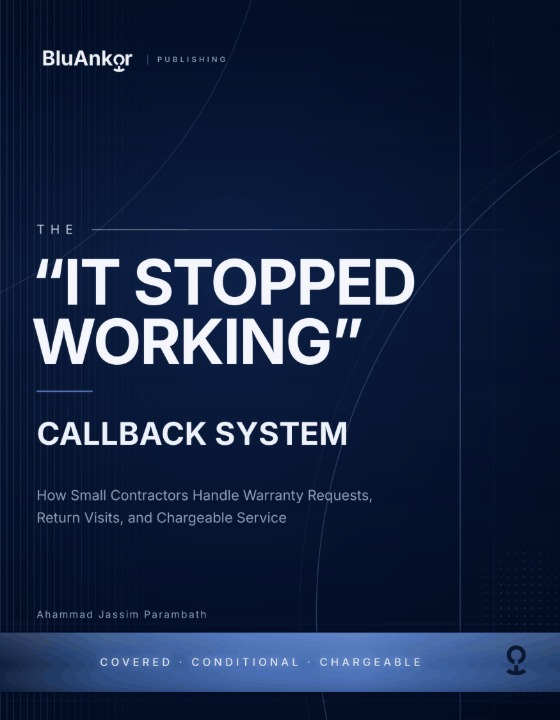
The “It Stopped Working” Callback System develops a complete operating approach for receiving the request, collecting evidence, classifying responsibility, communicating conditions, documenting the visit, and closing the matter professionally.
The “It Stopped Working” Callback System
How small contractors handle warranty requests, return visits, and chargeable service.
This resource provides general operational guidance. It does not determine contractual or legal responsibility and is not a substitute for reviewing the applicable agreement, warranty terms, manufacturer requirements, or professional advice.